Making Pancetta at Home
In January 2019, I decided to try my hand at making pancetta - the Italian cured pork belly that’s basically unsmoked bacon. It’s one of those projects that sounds intimidating but is actually pretty straightforward once you understand the process.
What is Pancetta?
Pancetta is an Italian cured meat made from pork belly. Unlike American bacon, it’s not smoked - it’s salt-cured and air-dried, which gives it a more delicate, pork-forward flavor. It’s traditionally rolled into a cylinder (pancetta arrotolata) and hung to cure for several weeks.
The Process
Curing the Belly
I started with a nice slab of pork belly from a local butcher. The cure was a simple mix of salt, curing salt (for safety and that classic pink color), black pepper, garlic, and some aromatic herbs. I rubbed the cure all over the belly and let it sit in the fridge for about a week, flipping it daily.
Rolling and Tying
After the initial cure, I rinsed off the excess salt, dried the belly, and rolled it up tightly with the skin on the outside. The key is getting it as tight as possible to avoid air pockets. I tied it up with butcher’s twine in a classic roast pattern.
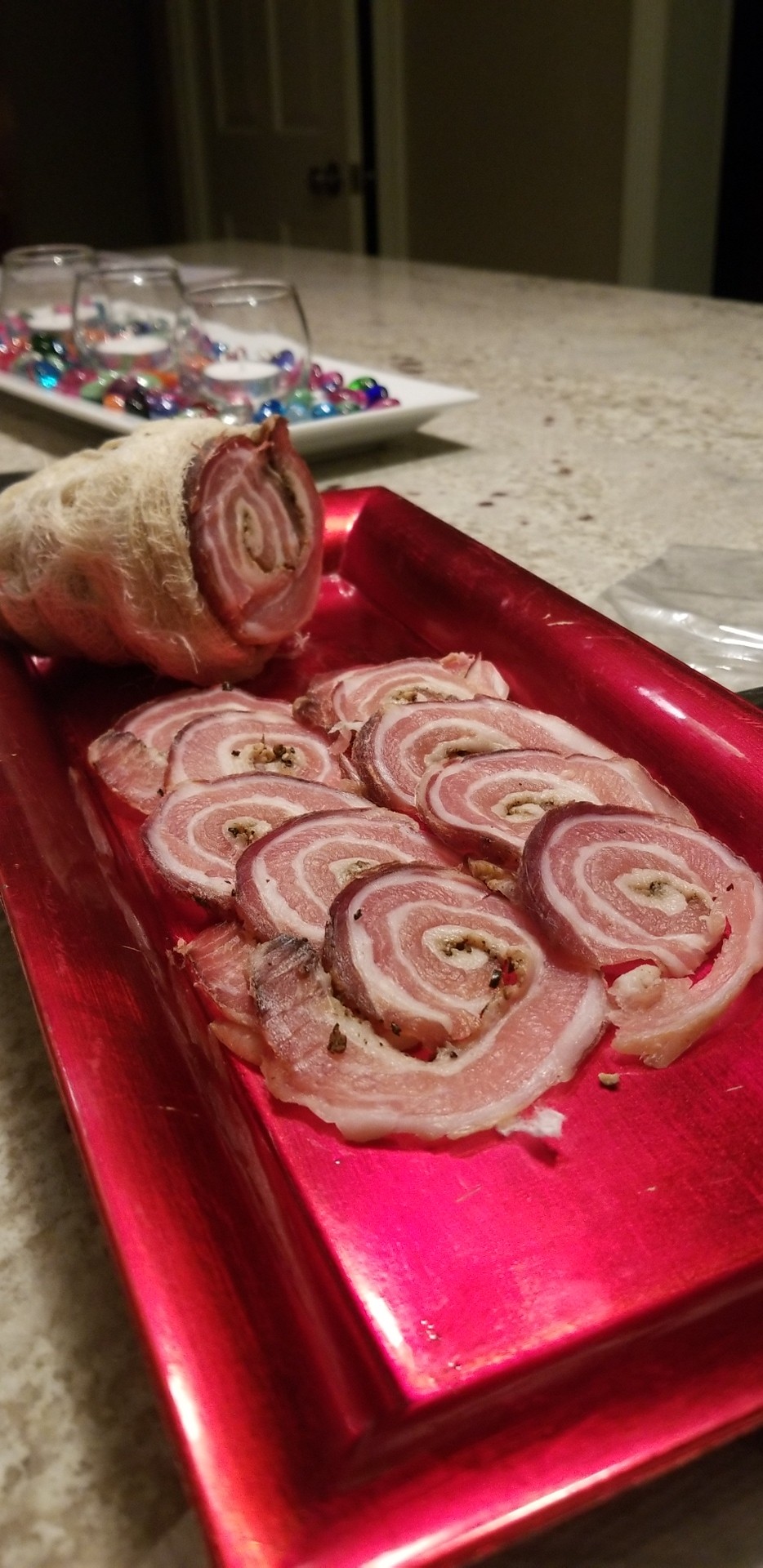
Fresh from the cure - you can see the herb mixture in the spiral and the tight roll wrapped in cheesecloth.
Hanging to Dry
The rolled pancetta went into a cool, humid spot to hang for about three weeks. The goal is to lose around 30% of its weight through moisture loss. You want it firm but not rock-hard.
The Result
After three weeks of patient waiting, I finally got to slice into it. The texture was perfect - firm enough to slice thin, with beautiful marbling throughout.
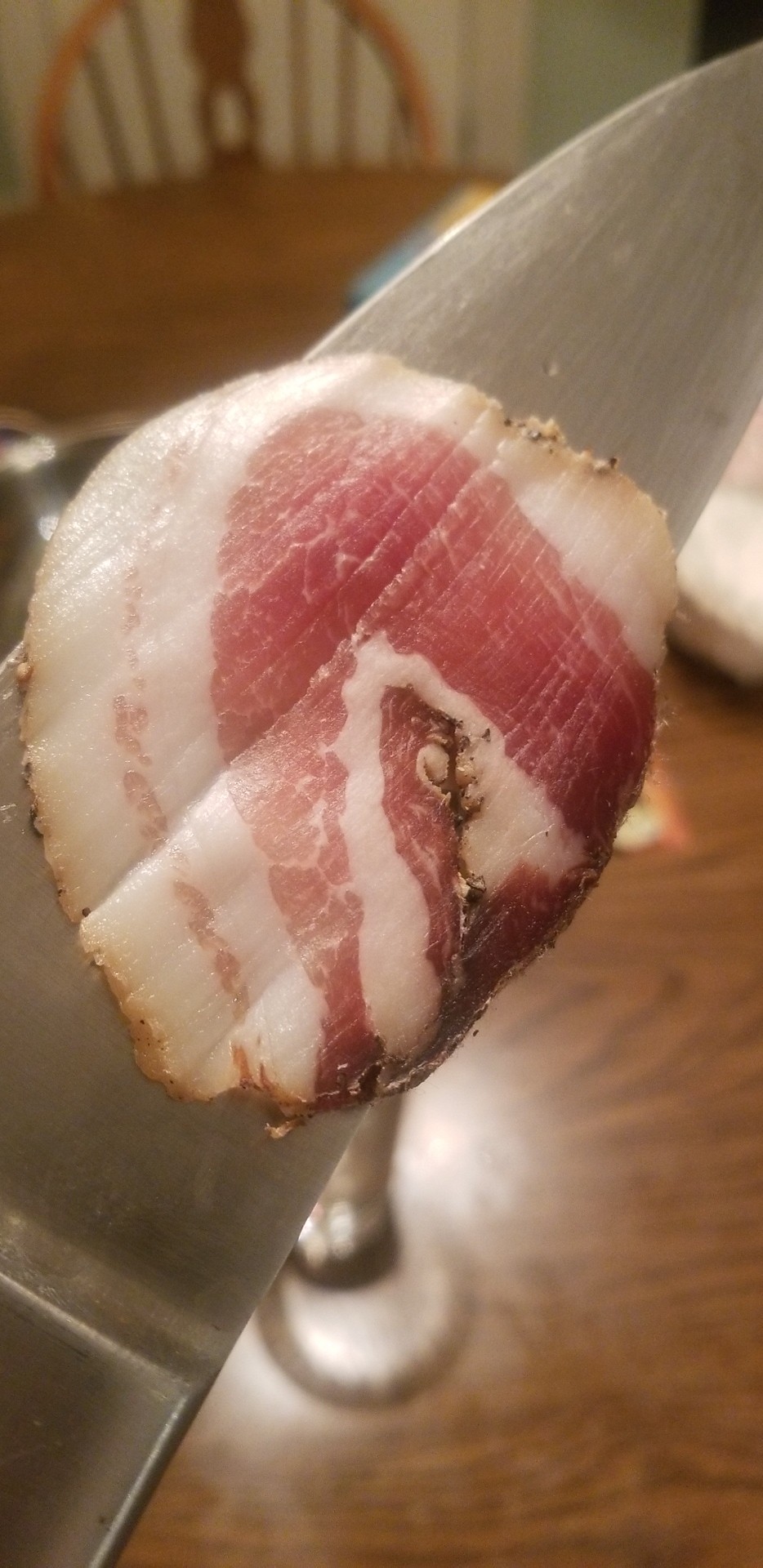
The finished pancetta after three weeks of curing. That deep red color and the marbled fat layers are exactly what you want.
Was It Worth It?
Absolutely. Store-bought pancetta is good, but there’s something special about slicing into something you cured yourself. The flavor was incredible - porky, savory, with a nice pepper kick. It made the best carbonara I’ve ever had.
If you’re interested in charcuterie, pancetta is a great starter project. It’s forgiving, doesn’t require any special equipment beyond a cool place to hang it, and the results are genuinely impressive.