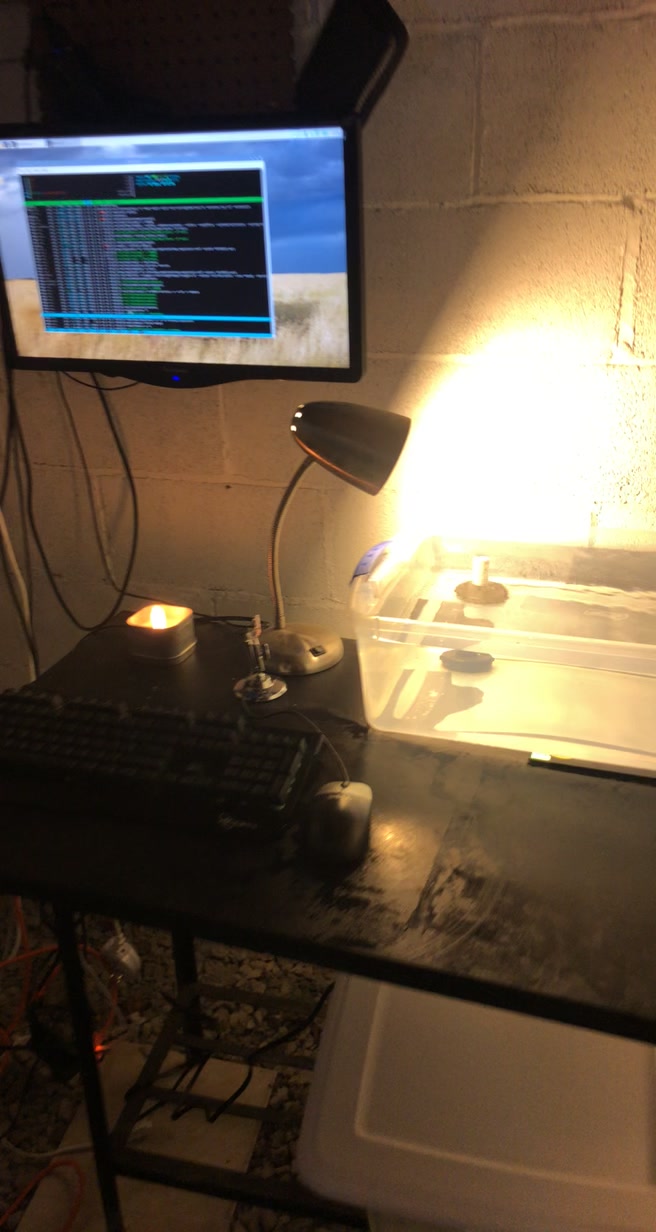
The Basement Coral Lab
In late 2020, I set up a small coral frag tank in the basement of the Hickman House. The goal wasn’t just to keep coral alive - it was to study how light behaves as it passes through water and interacts with coral structures. I wanted to eventually model this digitally, capturing the way coral refracts and diffuses light in ways that are hard to replicate computationally.
The Setup
The lab was decidedly low-budget and experimental. I used clear plastic storage containers as tanks - not the prettiest solution, but functional and easy to modify. They sat on a metal shelf rack against the cinder block basement wall, giving the whole setup a distinctly DIY science-experiment vibe.
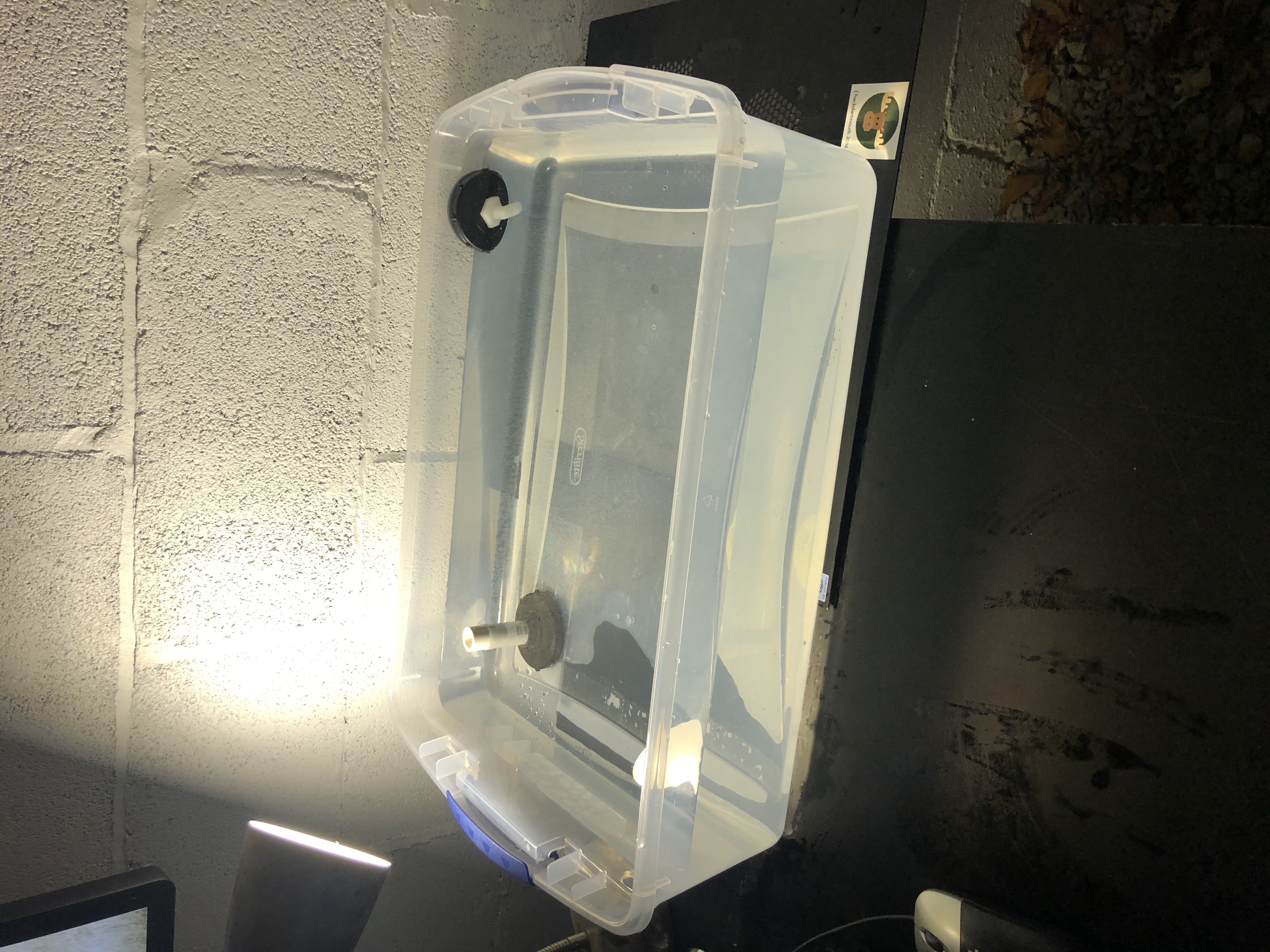
The main frag tank - a clear storage container with bulkhead fittings for water flow. Simple but effective.
The lighting was critical since that was the whole point of the project. I used a bright lamp to simulate intense reef lighting, which created some pretty dramatic effects when shining through the water. The way light scattered and bounced around inside the tank was mesmerizing - and exactly what I wanted to study.
The Science Side
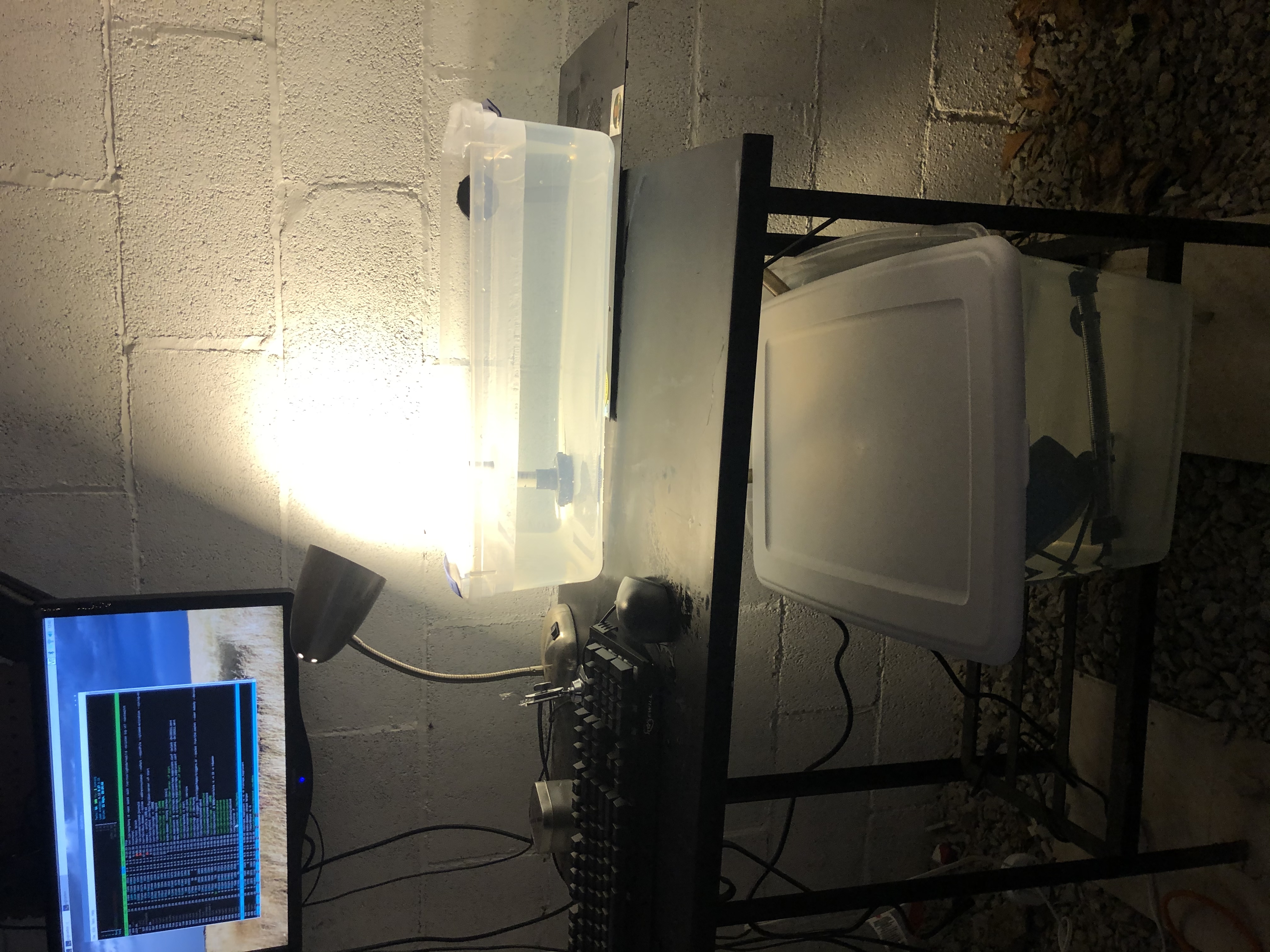
The full setup - frag tank illuminated with a laptop running monitoring software nearby.
I had a laptop set up next to the tank running monitoring and analysis software. The idea was to capture data about light intensity, water parameters, and eventually photograph the light patterns to use as reference material for digital modeling. Coral creates these incredible caustic patterns as light passes through the polyps and skeleton structure - patterns that are notoriously difficult to render accurately in computer graphics.
Why Coral?
Coral is fascinating from both a biological and optical perspective. The calcium carbonate skeletons have complex branching structures that scatter light in unpredictable ways. The living polyps add another layer of complexity with their translucent tissues. And the symbiotic algae (zooxanthellae) that live inside the coral tissue fluoresce under certain wavelengths, creating even more interesting optical effects.
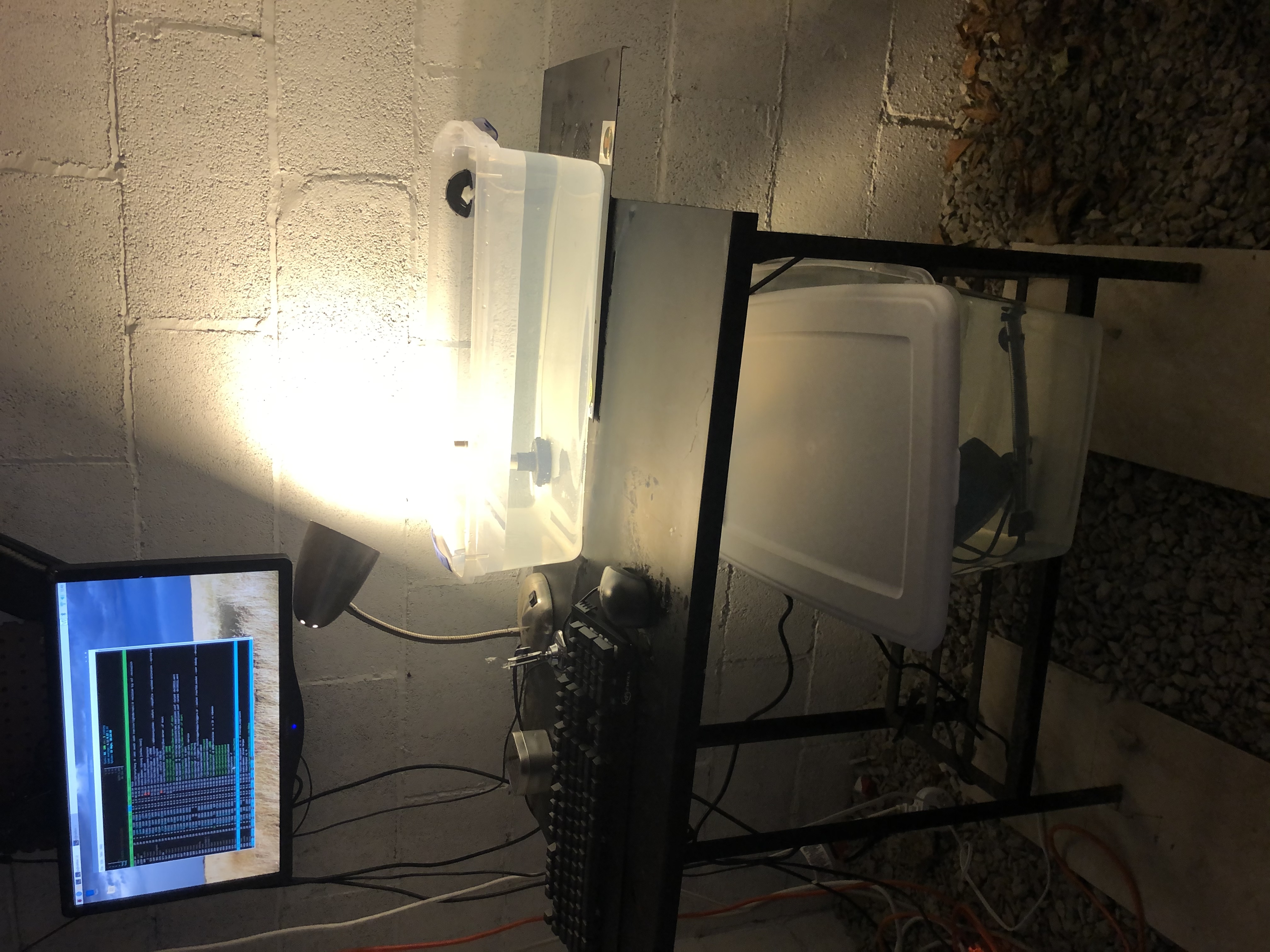
Another angle showing the dual-tank setup and the laptop monitoring station.
I was particularly interested in how different coral morphologies - branching vs. plating vs. encrusting - created different light refraction patterns. A branching Acropora scatters light completely differently than a brain coral, and capturing those differences mathematically was the ultimate goal.
Lessons Learned
Running a coral tank in a basement presents some unique challenges. Temperature stability was actually excellent thanks to the basement’s natural insulation, but humidity became an issue. Evaporation was constant, and topping off with fresh water became a daily task.
The project taught me a lot about both coral husbandry and optics. While I never got as far as I wanted with the digital modeling side, the observations I made about light behavior in the tank were genuinely useful. There’s something special about combining marine biology with computer science - two fields that don’t often overlap but complement each other surprisingly well.
The basement coral lab eventually moved on to other projects, but the fascination with light refraction and natural optical phenomena stuck with me. Sometimes the best experiments are the ones that raise more questions than they answer.