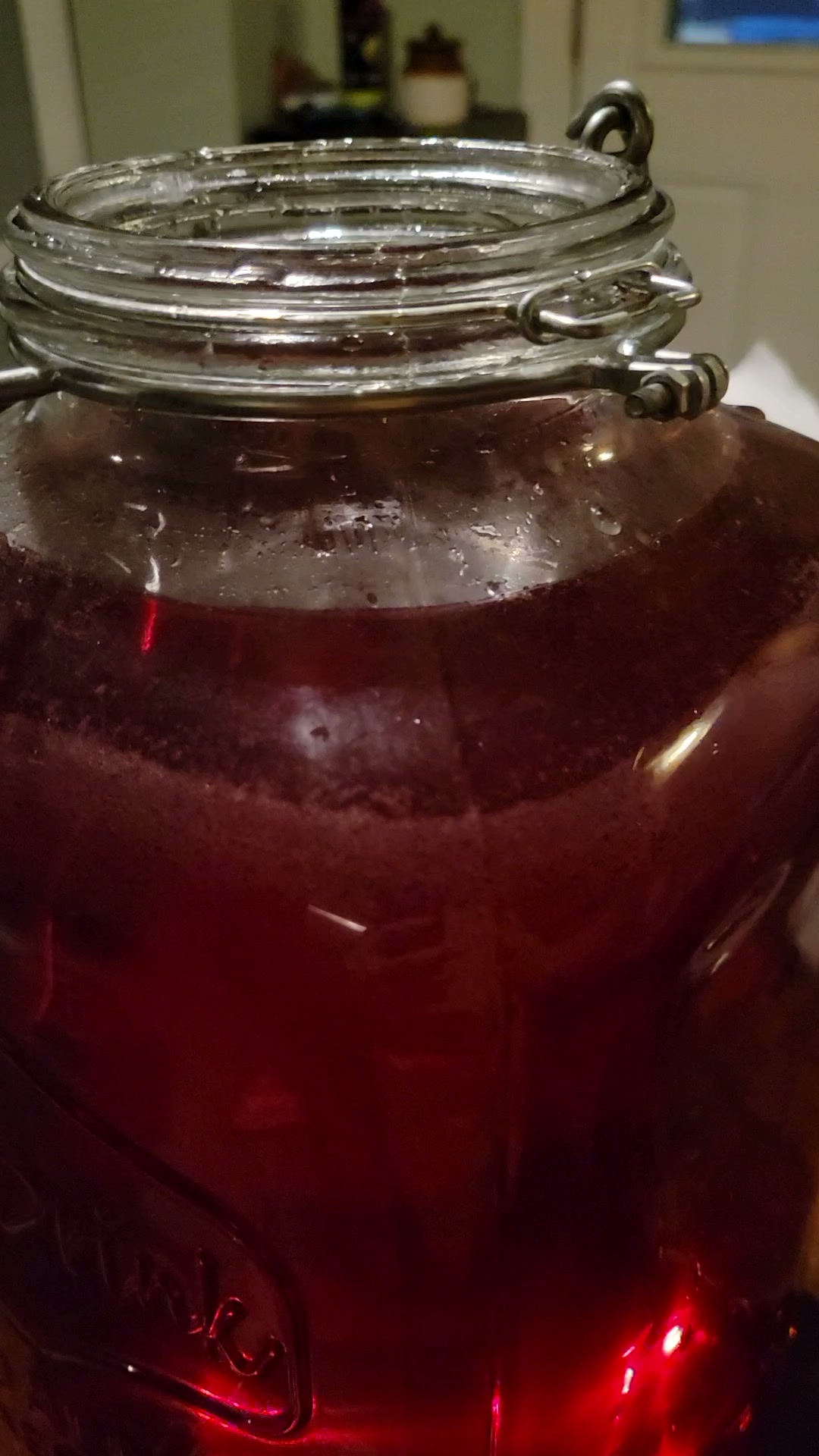
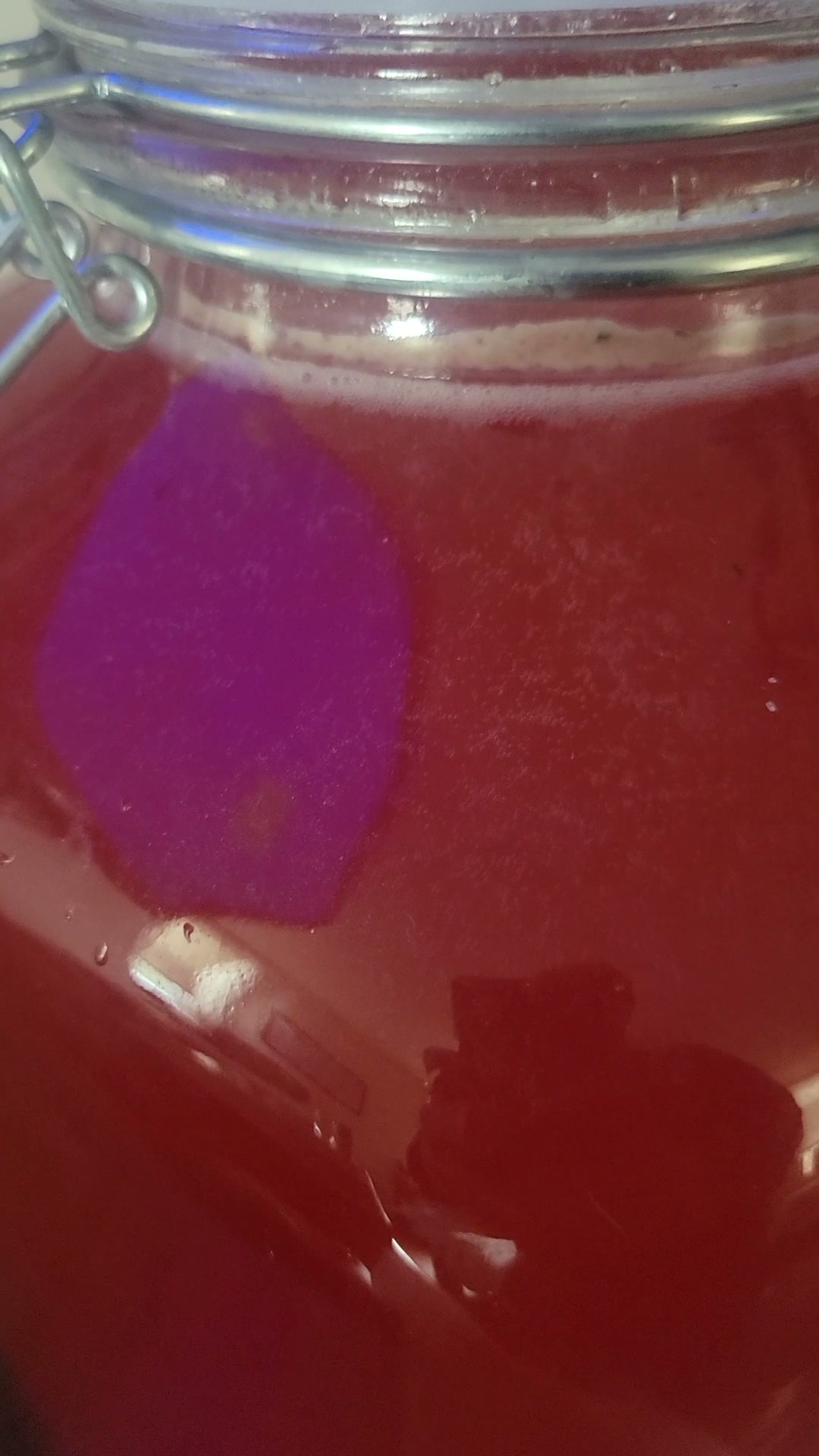
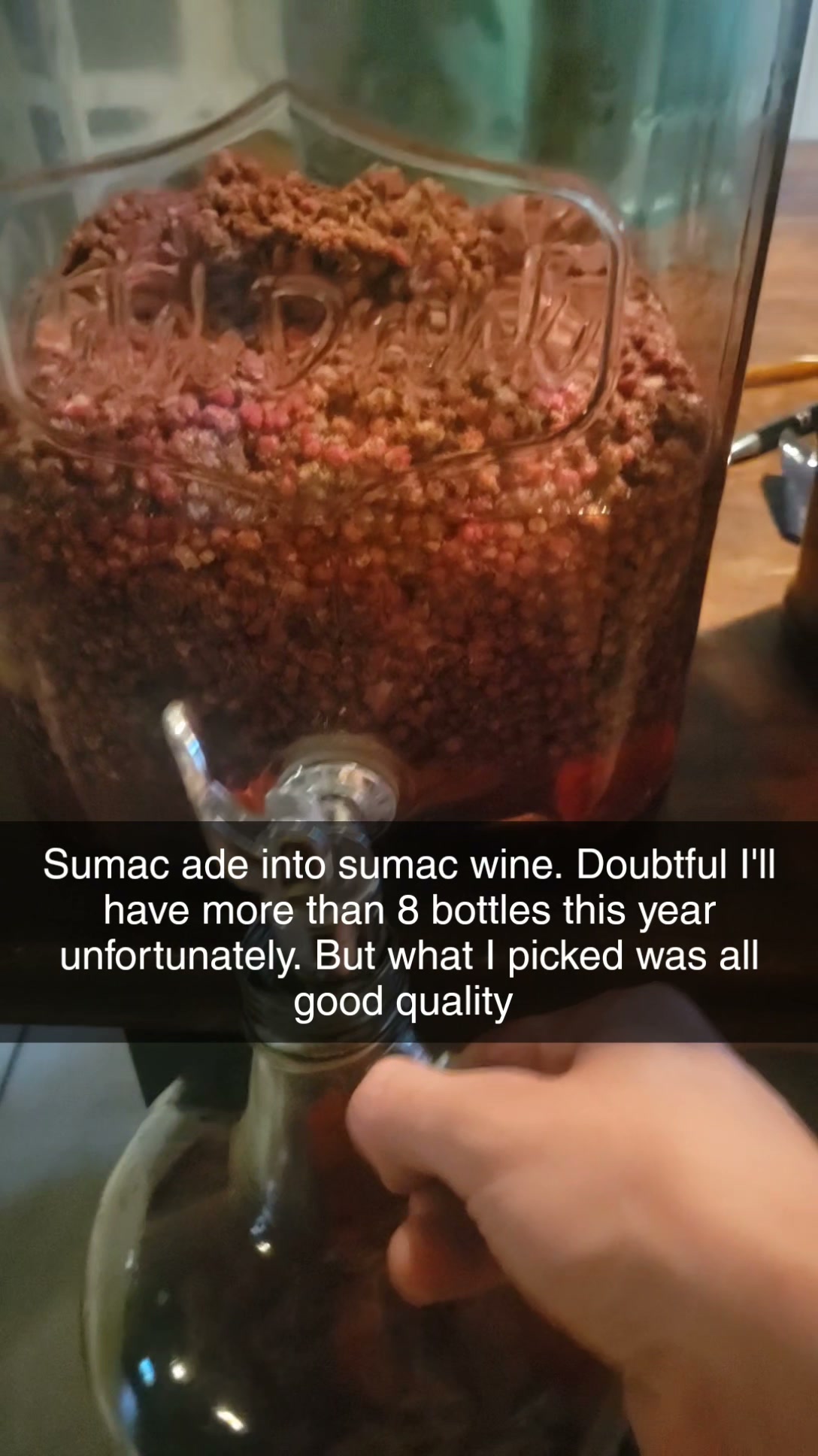
Making Sumac Wine
Late summer means sumac season. Those fuzzy red clusters you see along roadsides and field edges aren’t just pretty - they’re edible, and they make a surprisingly good wine.
Harvesting Sumac
Staghorn sumac (the fuzzy red kind, not poison sumac which has white berries) has a tart, almost lemony flavor. It’s been used to make “sumac-ade” - basically wild lemonade - for generations. But I wanted to take it a step further and try fermenting it into wine.
The harvest is straightforward: cut the red berry clusters when they’re deep red and fuzzy. You want to get them before a heavy rain, which can wash away the flavor compounds on the surface of the berries. The tartness comes from malic acid concentrated in the fuzzy coating.
The Process
Making sumac wine follows the basic winemaking process with some adjustments:
- Extraction - Soak the sumac clusters in water to extract the flavor. Cold extraction works best to avoid bitterness.
- Sweetening - Add sugar to bring the potential alcohol up to wine levels. Sumac on its own is quite tart.
- Fermentation - Pitch the yeast and let it work. The fermentation was vigorous - sumac apparently makes happy yeast.
- Clearing and aging - Like any wine, patience improves the final product.
The Result
The finished wine has a pink-amber color and tastes unlike any commercial wine I’ve had. There’s a tartness reminiscent of a dry rosé, but with an earthy, wild quality that you can’t get from cultivated grapes. It’s distinctly sumac.
Is it the best wine I’ve ever made? Probably not. But there’s something satisfying about making alcohol from something you foraged yourself. The whole process - from spotting the sumac along a back road to pouring a glass months later - connects you to the land in a way that buying a bottle never can.
If you’re curious about foraging and fermentation, sumac wine is a good project. The raw materials are free, the process is forgiving, and even if the wine isn’t perfect, you’ll have learned something and have a good story to tell.
Process Videos